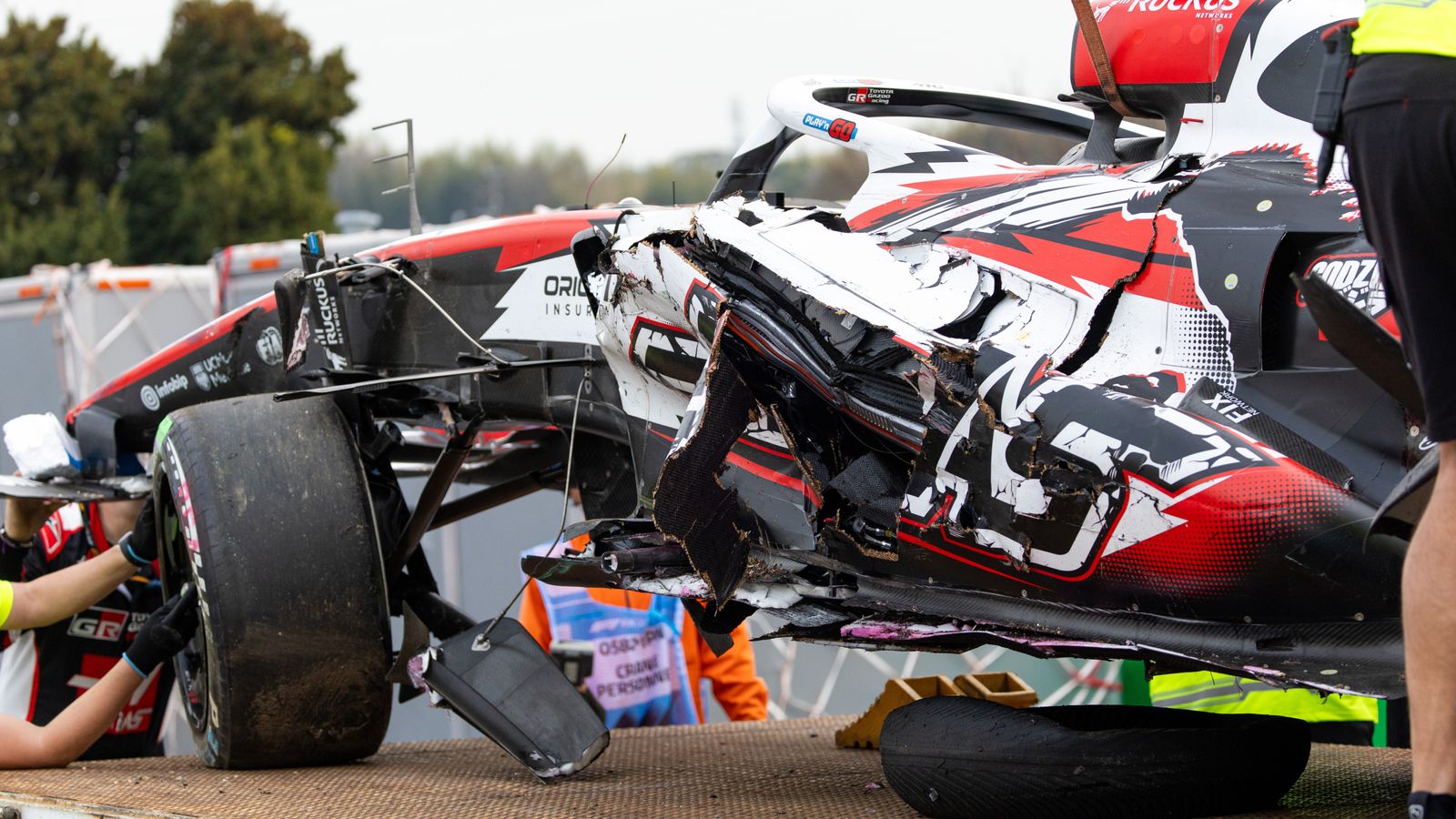
The FIA has confirmed meetings will take place in April to discuss Formula 1's new regulations following Oliver Bearman's crash at the Japanese Grand Prix.
Bearman went onto the grass and spun at over 190mph when trying to avoid Alpine's Franco Colapinto, who was slowing down on the flat-out run towards Spoon Curve, going across the track and hitting the barriers hard with a 50G impact.
The British driver gingerly climbed out of his car as he suffered a right knee contusion following the impact but was cleared of any further injuries.
The difference in speed between Bearman and Colapinto was a major talking point following Sunday's race at Suzuka and Bearman puts it down to the new 2026 regulations which sees cars slow down to harvest energy at the end of straights.
"It was a massive overspeed, 50kph, which is a real… it's a part of these new regulations that I guess we have to get used to, but also I felt like I wasn't really given much space given the huge excess speed that I was carrying," he said.
"It's something that we spoke about on Friday with the other drivers and the stewards, that we need to be a bit more lenient, a bit more prepared because of these huge deltas in speed.
"I think we've, as a group, warned the FIA what can happen, and this has been a really unfortunate result of a massive delta speed that we've never seen before in F1 until these new regulations."
The FIA put out a statement to provide "clarifications" and said "any speculation regarding the nature of potential changes would be premature".
"Since their introduction, the 2026 regulations have been the subject of ongoing discussions between the FIA, teams, power unit manufacturers, drivers and FOM," it added.
"By design, these regulations include a number of adjustable parameters, particularly in relation to energy management, which allow for optimisation based on real-world data.
"It has been the consistent position of all stakeholders that a structured review would take place after the opening phase of the season, to allow for sufficient data to be gathered and analysed. A number of meetings are therefore scheduled in April to assess the operation of the new regulations and to determine whether any refinements are required.
"Any potential adjustments, particularly those related to energy management, require careful simulation and detailed analysis. The FIA will continue to work in close and constructive collaboration with all stakeholders to ensure the best possible outcome for the sport and safety will always remain a core element of the FIA's mission."
Williams' Carlos Sainz, a director of the Grand Prix Drivers' Association, said the drivers held a meeting with the FIA in Suzuka where single-seater director Nicolas Tombazis said changes would be made for the next round in Miami in early May.
Sainz says a "better solution" is needed to come up with a "safer way of racing" that addresses the significant closing speeds.
"I was so surprised when they said 'we will sort out qualifying and leave the racing alone because it's exciting'. As drivers, we have been extremely vocal that the problem is not only qualifying, but also racing," he said.
"We have been warning this kind of accident will always happen. In Suzuka, we were lucky there was an escape road. Imagine going to Baku or Singapore, or Las Vegas and having these kind of closing speeds.
"As the GPDA, we have warned the FIA these accidents will happen a lot with this set of regulations and we need to change something soon if we don't want it to happen.
"I hope it serves as an example and the teams listen to the drivers and not so much to the teams and some people that said 'the racing is OK', because the racing is not OK."
McLaren team principal Andrea Stella warned of high closing speeds during pre-season testing in February and stated Bearman's accident is "not a surprise".
"I think we have to look at the data. Teams should share information in terms of what was going on with Colapinto's car and Oliver's car," he said.
"In general, the reason of adding a 350kph super clip is that we would like to avoid drivers having to do a lift and coast because if there's a lift and coast, there's an even bigger speed differential with the car that is following.
"It's a case that should be studied with a certain level of analytical approach. I don't think a simple solution exists. But we have the expertise, the engineers, there's the variables to put in place some actions. I think this will be something that will be looked at in the meetings that will happen during the break between FIA, the teams and F1. This should jump at the top of the agenda."
F1 returns on May 1-3 with the Miami Grand Prix, the season's second Sprint weekend, live on Your Site F1.
